
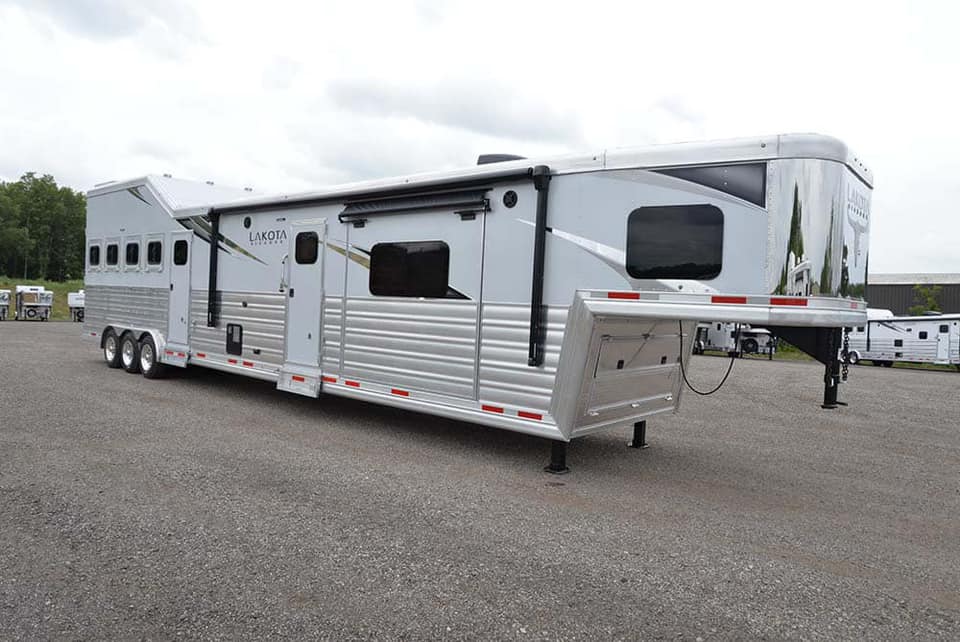
Used living quarters horse trailers can save you a large share of the cost of buying new while still delivering a bed, kitchen, bathroom, and horse area in one rig. They also combine two sets of potential problems: a horse trailer’s floor, frame, and running gear, plus an RV’s roof, plumbing, electrical, and propane systems. These 10 proven tips will help you evaluate used living quarters horse trailers and buy smart.
Set aside a few hours to inspect used living quarters horse trailers properly. Bring a flashlight, moisture meter if you have one, gloves, a tire gauge, and your truck to test lights and brakes. Ask the seller to have water, propane, and shore power available so you can test systems.
Tip 1: Define Your Must-Haves First
Decide on the number of horses, minimum short wall length, floor plan (rear or side kitchen), whether you need a slide-out, generator, or separate shower, and your all-in budget. Our living quarters horse trailer guide explains each choice. A clear list keeps you from overpaying for features you will not use.
Tip 2: Start With the Roof
Water damage is the most expensive problem in used living quarters horse trailers. Inspect the roof from above if you can do so safely. Look for cracked or missing sealant around vents, the air conditioner, antennas, and seams. Inside, look for stains on the ceiling, soft spots, bubbling paneling, and musty smells, especially in corners and around windows.
Tip 3: Check for Hidden Water Damage
Open every cabinet, look under sinks, inspect around the toilet and shower, and press on floors near the entry door, kitchen, and bathroom. Soft floors or delaminating walls can signal long-term leaks. A moisture meter helps find wet areas you cannot see.
Tip 4: Test the Plumbing
Fill the fresh water tank or connect city water. Run every faucet, the shower, and the toilet. Turn on the water pump and listen for it cycling when no water is running, which can indicate a leak. Check under sinks and behind access panels for drips. Ask about winterization history; freeze damage to lines and fittings is common in used living quarters horse trailers.
Tip 5: Test the Electrical System
Connect shore power and test outlets, lights, fans, and the air conditioner. Check the battery condition and whether the converter charges it. Test 12-volt lights and the water pump on battery power. If there is a generator, start it and run it under load. Ask for generator service records.
Tip 6: Check the Propane System and Appliances
Inspect propane tanks for rust, damage, and certification dates, and check hoses and regulators. Light the cooktop, water heater, and furnace, and confirm the refrigerator cools on each available power source. Test the propane, carbon monoxide, and smoke detectors and note their age; detectors have limited lifespans. If you smell propane, stop and do not continue testing.
Tip 7: Inspect Slide-Outs and Seals
If the trailer has a slide-out, extend and retract it several times. Listen for grinding and watch for uneven movement. Inspect seals for cracking and look for water stains around the slide. Slide repairs can be costly.
Tip 8: Do Not Forget the Horse Area
The horse side matters as much as the living side. Lift mats and inspect the floor, check dividers, latches, windows, vents, and padding, and look for sharp edges. Inspect the frame, welds, tires, bearings, and brakes. Living quarters trailers are heavy, so tire age and load rating matter; NHTSA explains tire aging and load safety. Our guide on how to inspect a used horse trailer covers these checks in detail.
Tip 9: Verify Weight and Truck Match
Used living quarters horse trailers are heavy, and options added over the years increase weight. Find the trailer’s GVWR and empty weight, then compare the loaded weight and pin weight with your truck’s ratings. Weighing the trailer at a scale is the most reliable approach. Our article on horse trailer towing capacity walks through the math.
Tip 10: Check Paperwork and Consider a Professional Inspection
Confirm the VIN matches the title, the seller’s name is on the title, and there are no liens. Ask for service records for the trailer, generator, and appliances. For higher-priced used living quarters horse trailers, a professional RV inspection can be well worth the cost because it may catch problems you would miss.
Used Living Quarters Horse Trailers: Inspection Summary
| Area | Key checks |
|---|---|
| Roof | Sealant, seams, vents, AC, stains inside |
| Interior | Soft floors, delamination, musty smells |
| Plumbing | Leaks, pump cycling, water heater, toilet |
| Electrical | Shore power, battery, converter, generator |
| Propane | Tanks, hoses, appliances, detectors |
| Slide-out | Operation, seals, leaks |
| Horse area | Floor, dividers, ventilation, frame |
| Running gear | Tires, bearings, brakes, lights |
Red Flags
- Strong musty odor or visible mold.
- Soft spots in the living area floor or walls.
- Seller cannot demonstrate appliances or systems.
- Fresh caulk covering large areas of the roof without explanation.
- No winterization history in a cold-climate trailer.
Used Living Quarters Horse Trailers FAQs
How old is too old for a used LQ trailer?
Condition matters more than age. A well-maintained older trailer can be a great value, while a neglected newer one can hide expensive damage.
What is the most expensive repair to watch for?
Water damage from roof or plumbing leaks can be very costly because it affects floors, walls, and structure.
Can I finance a used living quarters trailer?
Many lenders finance used trailers, with terms depending on age and price. Compare offers before shopping.
Buy Smart
Used living quarters horse trailers can deliver years of comfortable travel at a fraction of the cost of new. Use these 10 proven tips, test every system, and do not skip the roof and the horse area.
Browse our current living quarters trailers and full inventory, or contact us with questions about any trailer. Call or text (406) 208-3277, Monday through Friday, 9am to 5pm.